
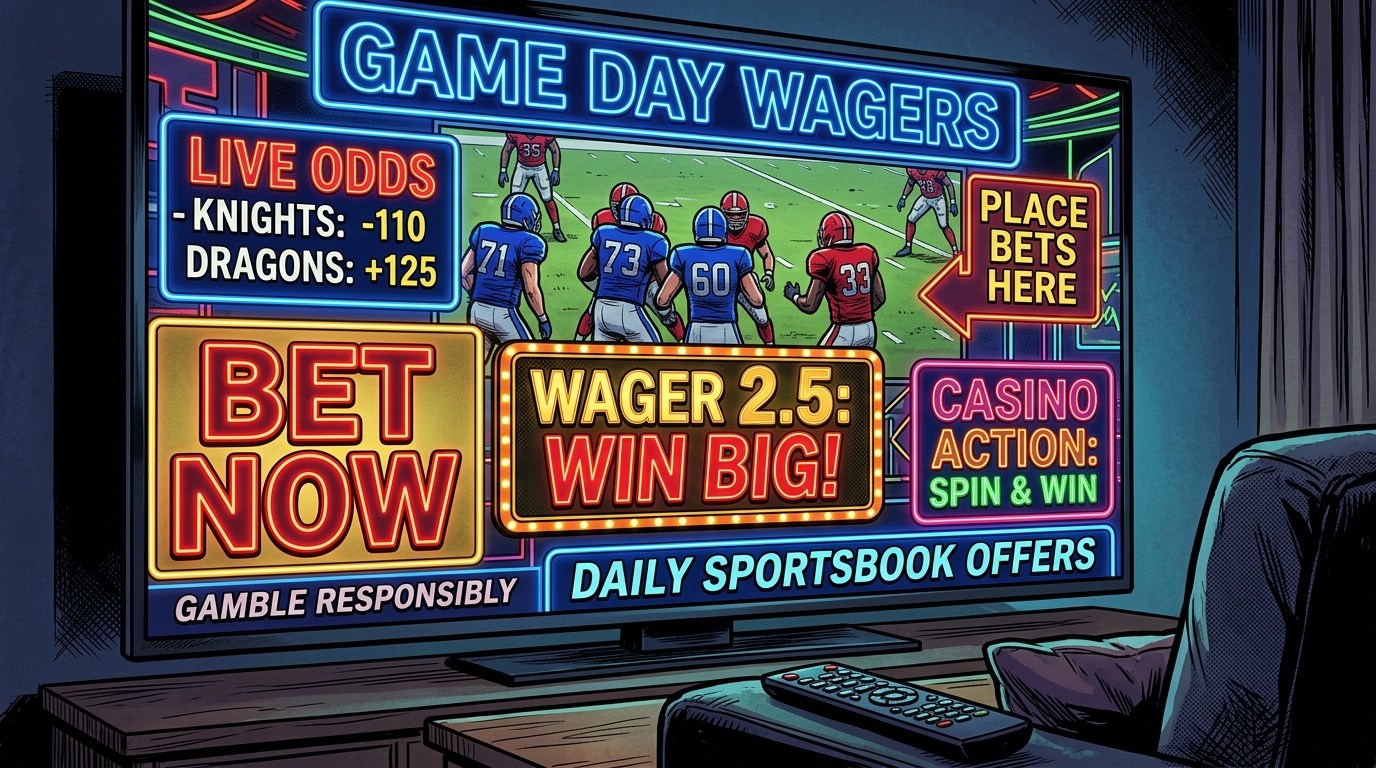
The Washington Post ran an investigation last week and the finding was so obvious it felt like a prank. Using AI to analyze roughly 90,000 video frames across 50 hours of live sports TV, they found that gambling-related content appears every four minutes on average. Twenty-seven percent of one-minute segments contained something gambling-related. One hundred percent of games — not most, all — had at least one betting reference. This is the water we swim in now.
Hockey was the worst offender. Sixty percent of one-minute segments during hockey broadcasts had gambling content in them. Think about that the next time you’re watching a power play. Someone is probably telling you the over/under on shots on goal.
The crazy part isn’t the number. The crazy part is that eight years ago this was illegal almost everywhere.
PASPA — the Professional and Amateur Sports Protection Act — was struck down on May 14, 2018. The Supreme Court ruled 6-3 in Murphy v. NCAA and suddenly the states were off to the races. Thirty-eight or 39 of them, plus D.C., have legalized sports betting since. Sportsbook ad spend went from basically a rounding error in 2019 to roughly $2 billion at peak in 2021-22. The money has come down since — about 21% from 2022 to around $1.2 billion in 2023 — but that’s consolidation, not retreat. The ad frequency hasn’t dropped. The WaPo data is from 2026. The odds are still everywhere.
Jon Hamm is telling you to make it legendary for BetMGM. LeBron James is pushing DraftKings. The guy who played Don Draper is now literally doing sports betting advertising, which is either the most on-brand casting in history or a commentary on something dark — you pick.
A University of Bristol study found that during the 2025 NHL Finals specifically, a gambling reference appeared every 13 seconds at peak saturation. Every. Thirteen. Seconds. That’s faster than the shot clock. You cannot watch sports at this point without your brain being lightly marinated in line movement and parlays.
And here’s the thing: nobody held a gun to our heads. We watched the legal challenges play out in real time. We saw the sportsbook commercials multiply from one awkward spot to a full broadcast takeover in about three seasons. Nobody organized a boycott. Nobody really complained that much. We just kept watching, kept downloading the apps, kept doing the first-bet-risk-free-up-to-a-thousand-dollars thing. The SAFE Bet Act is kicking around Congress trying to limit the timing and targeting of these ads, and 51% of sports fans in an Ipsos poll said they’d support banning gambling ads during sports broadcasts entirely — but that’s a poll, not a movement.
We clicked accept on this deal without reading the terms. Which, honestly, is on brand for how we consume everything now.
The decline in total ad spend — while the on-screen presence held steady — tells you all you need to know about how the math works. The sportsbooks don’t need to flood the zone with acquisition ads anymore. They’ve already got us. The repeat-customer phase is quieter and cheaper. The odds ticker in the corner of the screen is free content. The broadcast team dropping a line-move reference is baked into the culture.
There’s a version of a think piece where someone is horrified by all of this. This isn’t that.
The New York Fed has some data correlating sports betting legalization with increased consumer credit usage, which is the kind of sentence that could ruin your Sunday. But that’s for someone else to write. The point here is simpler: we were shown the menu, we ordered everything on it, and now we act vaguely surprised at the check. The gambling ads every four minutes are the check. We ordered this.
At least the hockey broadcast is honest about it.
 Betting Sports Blog